Source home use facial machine for Salon, Home, and Clinic
Find 30 home use facial machine options from verified suppliers. Compare features like RF technology, waterproof design, and multiple functions including skin rejuvenating and lifting for salon or home applications.
Key considerations
Products List








Comprehensive Sourcing Guide
Strategic Sourcing Guide for Home Use Facial Machines
Understanding the Technical Landscape and Product Variants
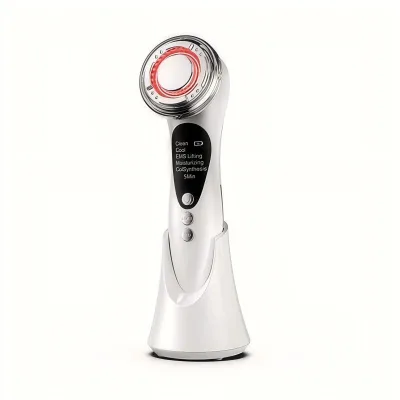
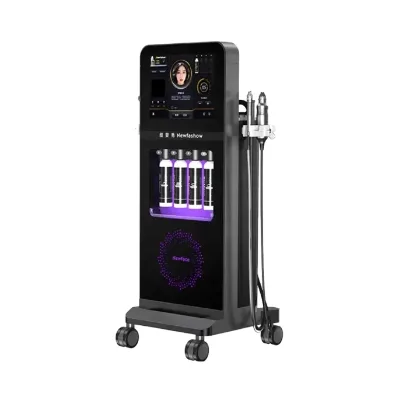
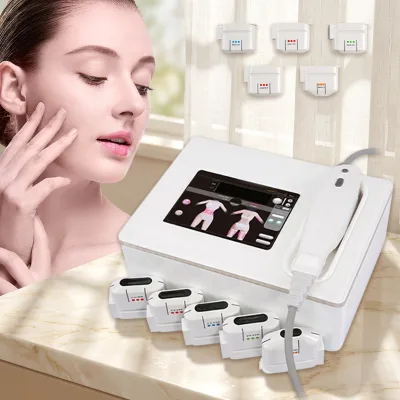
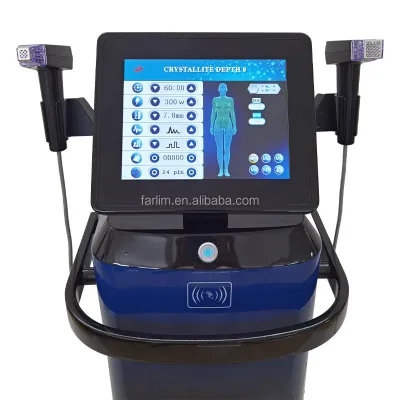
When sourcing home use facial machines, buyers must first navigate a diverse technical landscape where devices range from compact handheld units to larger table-top systems. The market data indicates a significant variation in design philosophy, with some units explicitly categorized as "Hand Held" while others are listed as "Table Type." This distinction is critical for procurement, as it dictates the intended user environment and the physical footprint required for the device. For home applications, the "Hand Held" configuration often aligns better with portability needs, even though some listings describe portable units while others note non-portable features. Buyers should verify the specific form factor against their target customer's lifestyle requirements.
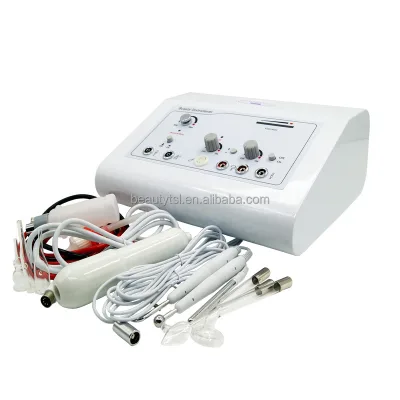
The core operating theory for many of these devices centers on Radio Frequency (RF) technology, which is widely recognized for skin rejuvenation and lifting. However, the product catalog reveals a broader spectrum of functionalities. Some units integrate High Frequency, Galvanic, and Ultrasonic waves, while others focus on specific treatments like vacuum extraction of impurities or the spray application of nutrition. A notable subset of devices includes germicidal and decongesting functions, suggesting a multi-modal approach to skincare. The power consumption varies significantly across these models, with observed ratings ranging from 20W for smaller specialized units to 275W for more robust systems. This variance in power output directly influences the intensity of the treatment and the electrical requirements for the end-user.
Furthermore, the physical construction of these machines is predominantly based on ABS plastic combined with stainless steel components. This material choice offers a balance between durability, hygiene, and cost-effectiveness. The exterior finish is typically white, though blue options and "as picture" variations exist, indicating potential for color customization. The inclusion of an LCD screen on certain models enhances user interaction, allowing for precise control over treatment parameters. Understanding these technical differentiators is the first step in defining a procurement specification that matches the intended market segment.
Compliance, Certification, and Electrical Standards
Navigating the regulatory environment is a paramount concern for any B2B buyer importing beauty equipment. The supplied data confirms that specific models carry CE certification, a mandatory compliance mark for products entering the European Economic Area. While ISO 13485 is mentioned in broader industry contexts as a standard for quality management in medical devices, buyers must verify if this specific standard applies to the individual supplier's production line, as it is not explicitly confirmed for every unit in the provided dataset. Relying solely on the presence of a CE mark without verifying the scope of the certification can lead to compliance gaps.
Electrical compatibility is another critical compliance factor. The observed voltage range for these devices is 110V to 220V, operating at 50/60Hz frequencies. This dual-voltage capability is essential for global distribution, as it allows the machines to function in regions with different power grids without requiring external transformers. However, the physical plug type varies, with listings indicating compatibility with CN, US, EU, AU, and UK standards. Procurement teams must ensure that the plug configuration matches the destination market's infrastructure. The power supply mode is consistently listed as "Plug-In," meaning these are not battery-operated devices, which simplifies the electrical safety profile but requires access to a wall outlet during use.
Buyers should also scrutinize the "prod_standard" field, which explicitly references CE for certain models. It is imperative to request the full test reports and certification documents from the supplier to confirm that the CE marking is valid and covers the specific model number being ordered. For markets outside the EU, such as the United States or Australia, additional certifications like UL or SAA may be required, and these should be verified independently. The warranty period is standardized at one year across the observed data, which serves as a baseline for after-sales support expectations. Any deviation from this standard should be negotiated clearly in the contract.
Cost Drivers and Pricing Structure Analysis
The pricing for home use facial machines exhibits a wide spectrum, with observed values ranging from approximately $8.36 to $32,000. This massive disparity is not indicative of a single product line but rather reflects the inclusion of vastly different product categories, from basic handheld tools to advanced, multi-function table-top systems. The lower end of the price range likely corresponds to simpler devices with fewer functions, such as basic germicidal or decongesting units with lower wattage (e.g., 20W). Conversely, the higher price points are associated with complex systems featuring multiple technologies like RF, ultrasonic, and vacuum extraction, often housed in more durable materials or including advanced features like LCD screens and carrying cases.
Several factors drive these cost variations. The primary driver is the complexity of the internal circuitry and the number of active functions. A device offering five distinct functions, such as High Frequency, Galvanic, Lifting, Vacuum, and Ultrasonic, will inherently cost more to manufacture than a single-function unit. The material composition also plays a role; while most units use ABS and stainless steel, the quality and thickness of these materials can influence the final price. Additionally, the inclusion of accessories, such as specialized carrying cases or specific treatment heads, adds to the overall cost.
The Minimum Order Quantity (MOQ) is another significant cost driver. The observed MOQ range is between 1 and 3 units, which is relatively low and suggests that suppliers are flexible for smaller buyers or sample orders. However, buyers should be aware that unit prices often decrease as order volume increases. The "Selling Units" are listed as single items, meaning the base price is per unit, but bulk purchasing agreements can significantly alter the effective cost per piece. Buyers must analyze the total cost of ownership, including shipping, tariffs, and potential customization fees, rather than focusing solely on the listed unit price.
Typical Applications and Functional Capabilities
The application of these facial machines extends beyond simple home use, with many units explicitly marketed for "Salon, Home" dual usage. This versatility is a key selling point, as it allows beauty professionals to utilize the same technology in a clinical setting and recommend it for maintenance at home. The target areas for treatment are consistently identified as the Neck/Throat, Face, and Nose, indicating a focus on the upper facial region where signs of aging and skin texture issues are most prominent.
The functional capabilities of these devices are diverse. Skin rejuvenation is a primary function, often achieved through RF technology which stimulates collagen production. Lifting and tightening are closely related outcomes, aimed at improving skin elasticity. For buyers targeting specific skin concerns, there are models designed to remove spots, speckles, pimples, and acne, utilizing technologies like High Frequency or UV germicidal light. The inclusion of "Vacuum out Impurities From Skin" suggests a deep-cleaning function, while "Spray The Nutrition" points to a delivery system for serums or moisturizers.
The following table summarizes the key functional attributes observed in the product data:
| Function Category | Specific Capabilities | Typical Technology Used |
|---|---|---|
| Rejuvenation | Skin Rejuvenating, Lifting and Tightening | RF (Radio Frequency), Ultrasonic |
| Treatment | Remove Spot/Speckle, Remove Pimple, Remove Acne | High Frequency, Germicidal |
| Cleansing | Vacuum out Impurities From Skin | Vacuum Extraction |
| Delivery | Spray The Nutrition | Galvanic, Ultrasonic |
| General | Decongesting | High Frequency, UV |
Buyers should match these functions to the specific needs of their target demographic. For instance, a brand focusing on anti-aging solutions would prioritize RF and lifting functions, while a brand targeting acne-prone skin would focus on germicidal and decongesting capabilities.
Supplier Evaluation and Production Capabilities
When evaluating potential suppliers for home use facial machines, the place of origin is a critical data point. The observed production locations are concentrated in Guangdong, China, specifically in Guangzhou. This region is a well-established hub for electronics and beauty equipment manufacturing, offering a mature supply chain and experienced labor force. However, buyers must verify the specific factory capabilities rather than relying solely on the region. The "Customization: Available" attribute indicates that suppliers are open to OEM and ODM requests, allowing for branding, color changes, and feature modifications.
The production model numbers, such as M66, B-6301, B-8121, and b-8125, serve as unique identifiers for different product lines. Buyers should request detailed specifications for each model to ensure they align with their requirements. The "Video: Can be provided" attribute suggests that suppliers are willing to demonstrate the product in action, which is a positive indicator of transparency. Additionally, the "prod_packing" details, which include foam and standard export cartons, highlight the supplier's attention to logistics and product protection during transit.
Buyers should conduct a thorough due diligence process that includes verifying the supplier's business license, production capacity, and quality control systems. While the data mentions CE certification, it is essential to confirm that the supplier has a consistent track record of maintaining this compliance. The warranty period of one year is a standard offering, but buyers should negotiate terms regarding the handling of defective units and the availability of spare parts. The "Non Portable" vs. "Portable" distinction also requires careful supplier communication to ensure the final product matches the intended use case.
Quality Control and Long-Term Procurement Strategy
Establishing a robust quality control (QC) protocol is essential for mitigating risks associated with importing electronic beauty devices. Given the variation in power ratings and the complexity of multi-function units, buyers should implement a rigorous inspection regime. This includes checking the electrical safety of the 110V-220V power supply, verifying the integrity of the ABS and stainless steel construction, and testing the functionality of all features, such as the LCD screen and various treatment modes. The "Waterproof: Yes" attribute requires specific testing to ensure the device can withstand moisture without electrical failure, a critical safety feature for devices used in bathroom environments.
For long-term procurement, buyers should consider the scalability of the supply chain. The low MOQ range of 1-3 units offers flexibility for initial market testing, but as demand grows, securing a consistent supply of high-quality units becomes paramount. Buyers should negotiate volume-based pricing tiers and establish clear lead times, although specific lead time data is not provided in the current context. It is advisable to request a production schedule and a buffer stock plan to prevent stockouts.
Furthermore, the "Customization: Available" feature offers an opportunity to differentiate products in a competitive market. Buyers can work with suppliers to develop unique color schemes, branding, or specific feature combinations that cater to niche markets. However, customization often involves additional costs and longer lead times, which must be factored into the procurement timeline. Finally, maintaining a strong relationship with the supplier is crucial for resolving any post-sales issues, managing warranty claims, and staying informed about new product developments or technology upgrades in the facial machine sector. By adhering to these strategic guidelines, buyers can build a resilient and profitable sourcing operation for home use facial machines.
FAQs
What certifications do these home use facial machines have?
Some models carry CE certification for European compliance. Buyers must verify specific test reports for each model number to ensure valid coverage before importing to the EU or other regions requiring similar standards.
Which voltage ranges are supported by these devices?
The devices support 110V to 220V at 50 or 60Hz frequencies. This dual-voltage capability allows operation in most global markets, though the physical plug type must match the destination country's infrastructure.
Can I customize the color or branding of the machine?
Customization is available for these home use facial machines. Suppliers offer options for colors like white or blue, and can modify branding, though specific model constraints may apply to the customization scope.
What is the typical warranty period for these units?
The standard warranty period is one year for the observed models. Buyers should confirm this baseline in the contract and negotiate terms for handling defective units or spare parts availability.
How do the power ratings vary across different models?
Power consumption ranges from 20W for specialized units to 275W for robust systems. Higher wattage often correlates with more complex functions like RF technology or multiple treatment modes.
What materials are used to construct these facial machines?
The primary materials are ABS plastic combined with stainless steel components. This combination balances durability and hygiene, with an exterior finish typically in white or blue.
Are these machines suitable for both salon and home use?
Yes, many units are explicitly designed for both salon and home applications. They target areas like the face, neck, and nose with functions such as lifting, tightening, and skin rejuvenation.